
Microservices architecture has become one of the most influential approaches in modern software development. Instead of building applications as a single, tightly coupled system, microservices break software into smaller, independent services that work together. Each service focuses on a specific business capability, making systems easier to scale, maintain, and evolve.

What Are Microservices?
Microservices are small, autonomous services that:
- Run independently
- Communicate with each other via APIs (HTTP/REST, gRPC, messaging queues)
- Are developed, deployed, and scaled separately
Each service usually owns its own data and logic, reducing dependency on other services.

Monolithic Architecture
- Single codebase
- One deployment unit
- Tightly coupled components
- Scaling requires scaling the entire application
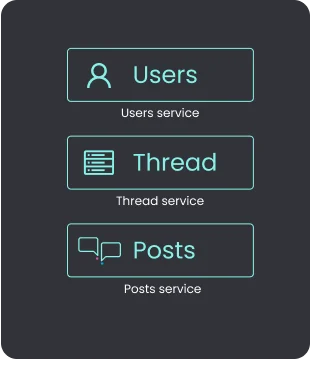
Microservices Architecture
- Multiple small services
- Independent deployments
- Loosely coupled
- Scale only what you need
This shift allows organizations to respond faster to change and reduce system-wide risk.
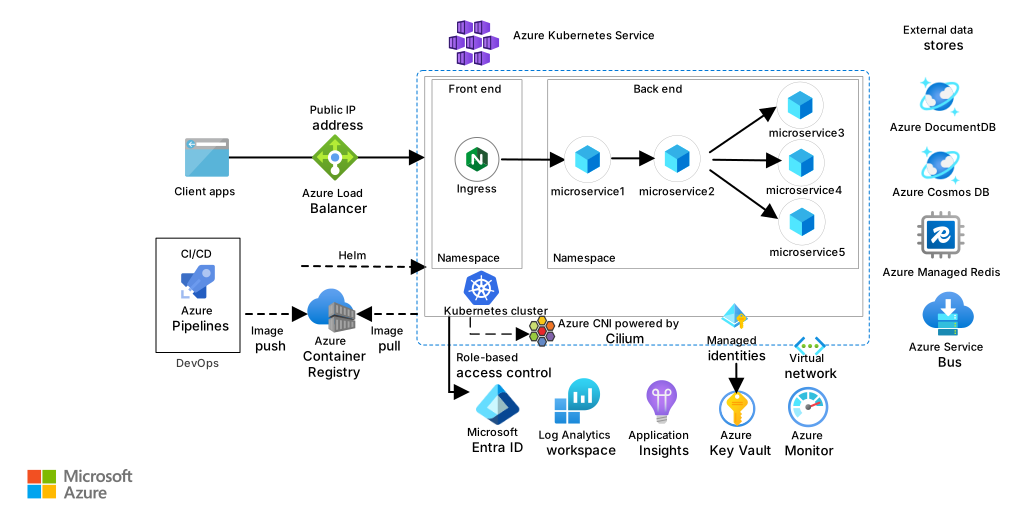
Key Components of a Microservices System
- API Gateway
Acts as a single entry point for clients, handling routing, authentication, and rate limiting. - Service-to-Service Communication
Services communicate via REST APIs, gRPC, or message brokers (e.g., Kafka, RabbitMQ). - Service Discovery
Automatically detects available services and their locations. - Containerization & Orchestration
Containers (e.g., Docker) package services, while orchestration platforms (e.g., Kubernetes) manage scaling and availability. - Observability
Logging, monitoring, and tracing ensure system health and quick issue diagnosis.
Benefits of Microservices
- Scalability – Scale individual services independently
- Flexibility – Use different technologies for different services
- Faster Deployment – Smaller codebases enable quicker releases
- Resilience – Failures are isolated, not system-wide
- Team Autonomy – Teams can own and manage their services end-to-end
When Should You Use Microservices?
Microservices are ideal when:
- Your system is growing rapidly
- You need high scalability and availability
- Multiple teams work on different domains
- Frequent deployments are required
For small or early-stage applications, a well-structured monolith may be simpler and more cost-effective.
Microservices architecture enables organizations to build scalable, resilient, and future-proof systems. While it introduces new challenges, the benefits often outweigh the costs for medium to large systems. The key is to adopt microservices thoughtfully—starting small, automating operations, and focusing on clear service boundaries.