
Artificial intelligence is rapidly moving beyond chat-based Q&A and into a more practical role: helping users take action across tools, workflows, and everyday digital tasks. One of the more interesting developments in this space is OpenClaw, an open-source, self-hosted AI assistant designed to run on your own machine or server while connecting to the chat platforms you already use.
At its core, OpenClaw acts as a gateway between messaging channels and AI agents. Instead of limiting interaction to a single web interface, it allows users to communicate with their assistant through platforms such as WhatsApp, Telegram, Slack, Discord, Microsoft Teams, iMessage, and more. The official documentation describes it as a single Gateway process that manages sessions, routing, and channel connections, turning familiar chat apps into the front end of an always-available personal assistant.
What makes OpenClaw particularly notable is its self-hosted model. Unlike many SaaS-based AI assistants, OpenClaw is designed to run on infrastructure chosen by the user, whether that is a laptop, a homelab environment, or a VPS. The project positions this as a model of greater control: your assistant, your machine, your rules. It is also open source under the MIT license, which makes it attractive to developers, technical teams, and organizations that value transparency, extensibility, and ownership of their environment.
From a capability standpoint, OpenClaw is more than a chatbot. Official materials highlight support for tool use, sessions, memory, multi-agent routing, media handling, browser control, companion apps, and a skills platform that can extend what the assistant can do. In practice, this means the assistant is designed not only to respond to prompts, but also to work across workflows in a more agent-like way.
This matters because the market is shifting from AI tools that only generate content toward AI systems that can participate in execution. For businesses and technical users, that opens new possibilities: routing tasks through messaging apps, enabling lightweight automation, centralizing access to tools, and creating assistant experiences that feel more natural in day-to-day operations. OpenClaw stands out because it approaches that future through an architecture that emphasizes local control and flexible integration. That business relevance is an inference from the product’s documented design: self-hosting, multi-channel support, and tool-enabled agent workflows.
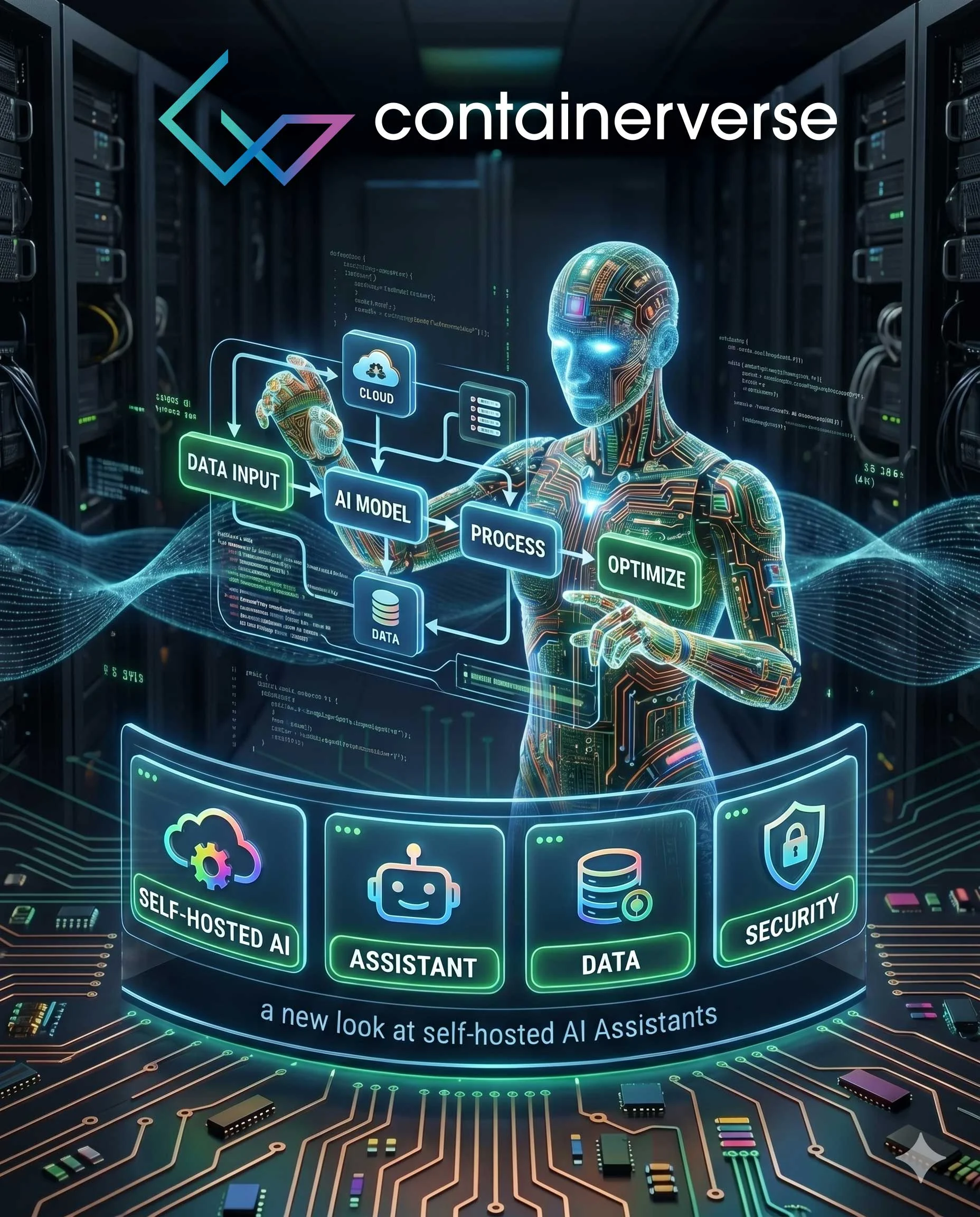
At Containerverse, we see OpenClaw as part of a broader shift in how AI assistants are being designed. The next generation of AI is not only about answering questions faster. It is about being available across the platforms people already use, interacting with tools more intelligently, and fitting into real operational environments instead of isolated demos. OpenClaw reflects that transition well: it combines AI models, messaging channels, and extensible tooling into a more usable assistant framework.
For organizations exploring AI adoption, OpenClaw also highlights an important strategic idea: deployment model matters. A self-hosted assistant can be appealing for teams that want more control over infrastructure, access, and integration choices, rather than relying entirely on a closed hosted platform. At the same time, that model also implies greater responsibility for configuration, security, and maintenance. This conclusion is a practical inference based on OpenClaw’s self-hosted architecture and official security-oriented documentation structure.
In summary, OpenClaw is not simply another AI chatbot. It is an example of how the assistant model is evolving into something more connected, more operational, and more customizable. As AI continues to move deeper into daily workflows, platforms like OpenClaw offer a useful glimpse into what a more flexible, user-controlled assistant experience may look like in the years ahead.
Start Your AI Transformation Today
Discover how tailored AI solutions can streamline your operations and unlock new efficiencies for your business.